Another Audit Bites the Dust: Three Different Paths Back to Full Reimbursement

Contact Us

Three Facilities, One Goal: Getting Back to Full Reimbursement 

Three facilities. Three payers. Three different paths out of Prepayment Review — and back to getting paid for the care they provide.  

Understanding Prepayment Reviews 

A Prepayment Review (PPR) is when a payer flags a provider and changes how claims get  paid. Instead of the normal process — bill, then get reimbursed on your usual timeline — every claim is held before payment. The payer scrutinizes the clinical documentation,  confirms the care was medically necessary, and validates the claim before releasing any  money. 

For behavioral health and addiction treatment providers, that can mean weeks or months  of delayed cash flow, mounting administrative burden, and — if documentation doesn’t hold up — denials that snowball into a full-blown audit.  

That’s exactly where Hansei steps in: strengthening the clinical documentation, tightening  the authorization trail, and building the case that gets providers out of prepayment review  or overpayment recoupment — or keeps them from ever landing there in the first place.  

Hansei Solutions Approach to Prepayment Reviews

Unfortunately, there’s no guaranteed way out of Prepayment Review. What Hansei brings  instead is a deep pattern-recognition experience. We’ve seen PPR hit facilities at every  level of care, from detox to outpatient, and we’ve learned it doesn’t discriminate. Size,  reputation, years in operation — none of it makes a facility immune.

What we do see are patterns in why it happens. Geography plays a role — Anthem in  California, for example, has its own trends. So does taking on out-of-state patients, or  billing under specific plan types that draw more scrutiny. Recognizing these patterns early  is often the difference between a flag that resolves in weeks and one that drags on for months.  

No Single Playbook: How Facilities Actually Win  

Winning against PPR isn’t just about getting claims flowing again — it’s about coming out  the other side with a clean, well-documented case that holds up if it happens again. That’s  the real prize: less time firefighting admin, more energy going back into what actually  matters — treating patients. 

But there’s no single playbook for getting there. Depending on the payer, the trigger, and  the facility’s history, the path looks different every time — sometimes it’s tracking payer specific trends, sometimes it’s working directly alongside investigators. In the case studies  ahead, we’ll walk through a few of the approaches that have worked.  

Three Wins Against PPR: A Side-by-Side Look 

Understanding what a PPR or overpayment audit involves is one thing — living through it is  another. For the providers we work with, these reviews aren’t abstract compliance  exercises; they’re real threats to cash flow, staffing, and the ability to keep serving patients.  Here’s how three facilities found their way out.  
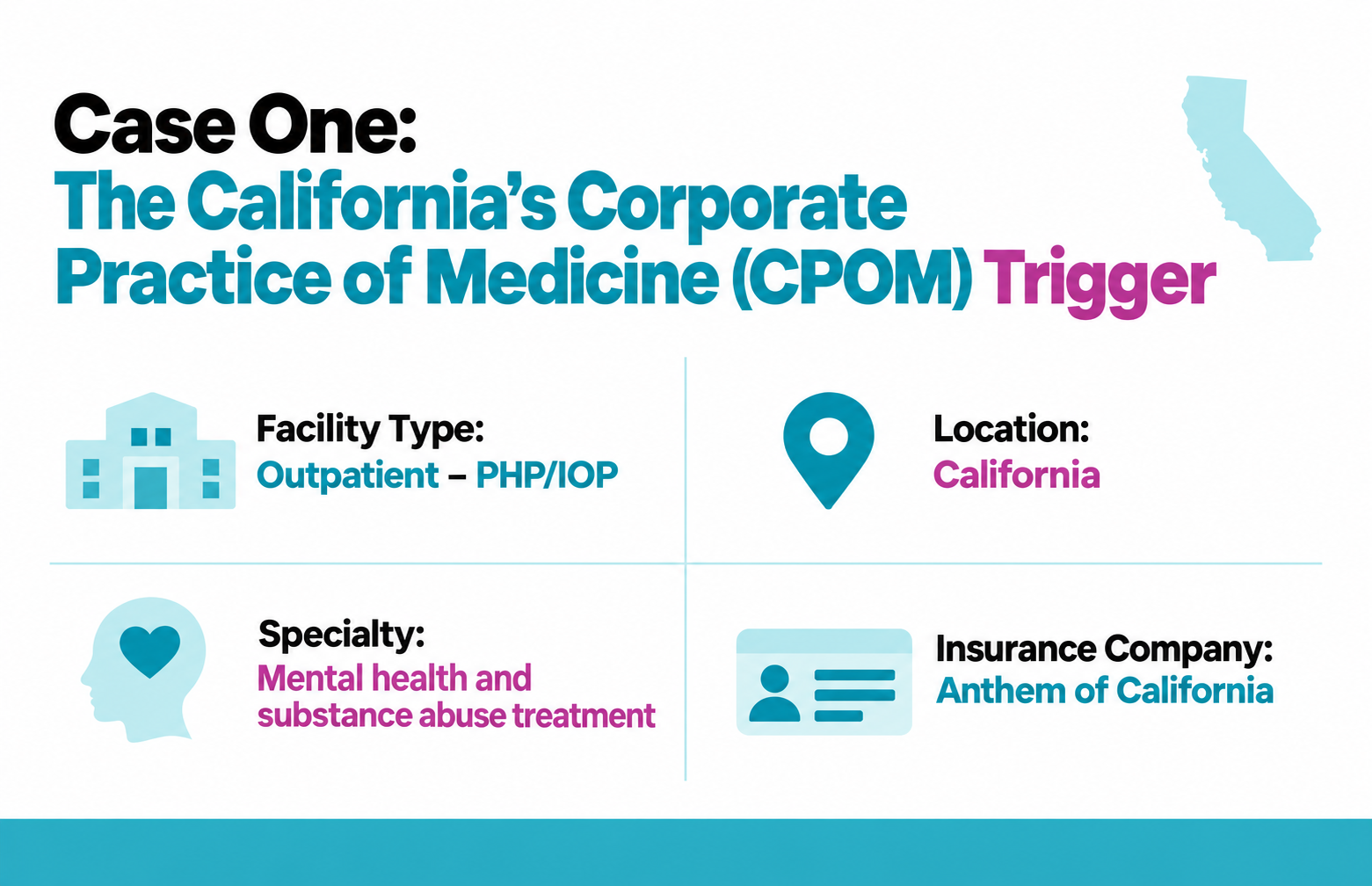
  • Facility Type: Outpatient – PHP/IOP  
  • Location: California  
  • Specialty: Mental health and substance abuse treatment  
  • Insurance Company: Anthem of California  
  • What triggered it: Billing for unbundled services and routine outpatient services  under a corporate structure that raised questions under California’s Corporate  Practice of Medicine (CPOM) doctrine — a rule that restricts non-licensed entities  from owning or controlling the clinical decision-making of a medical practice. In  California, treatment facilities structured without proper physician ownership or  oversight can draw payer scrutiny, since it raises red flags about who is directing  patient care.
  • PPR Audit Solution: The facility moved quickly to stop billing for the routine  outpatient services in question — but the review didn’t stop there. SIU findings  traced almost entirely to outdated administrative intake forms, not clinical or billing  practices. The response was two-pronged: update the intake forms for compliance  going forward, and appeal the existing findings on the grounds of administrative  denial and regulatory overreach. The appeal succeeded — the intake process was  ruled out-of-scope for the audit, and the payer subsequently revised its own  auditing practices. 
  • Current Status: The facility continues to see delay in payments even after being  released from PPR. 

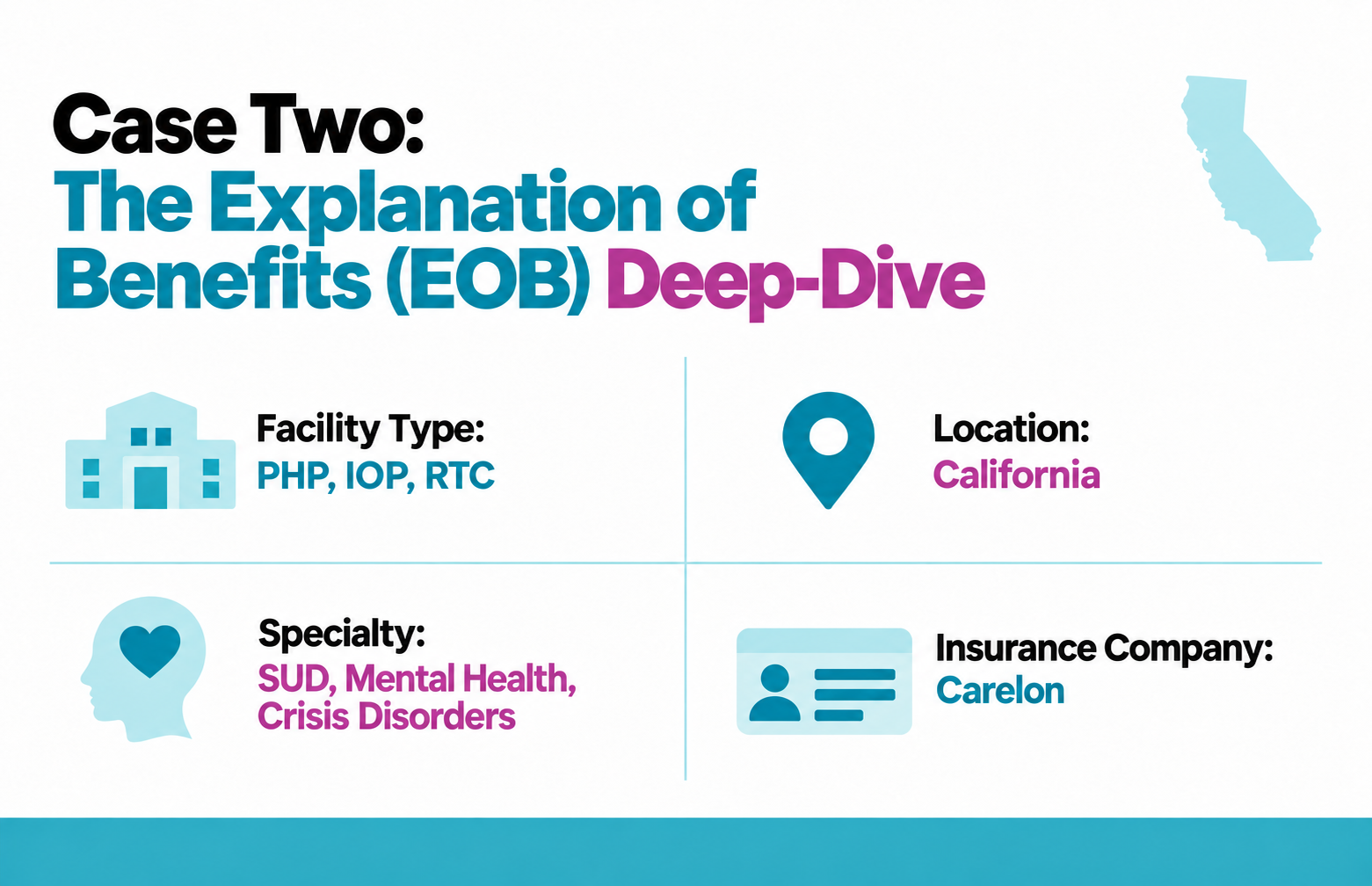
  • Facility Type: PHP, IOP, RTC 
  • Location: California  
  • Specialty: SUD, Mental Health, Crisis Disorders 
  • Insurance Company: Carelon 
  • What triggered it: Unknown. Carelon’s notice to provider did not contain a specific reason.  The notice was found to be non-compliant with the Knox-Keene Act. 
  • PPR Audit Solution: Hansei’s analyst team conducted a full review of the account,  identifying inconsistencies across claims and payer responses. By systematically  working through Explanation of Benefits (EOBs), the team built a clear, documented  case — leading to a rare outcome: Carelon took accountability for the  inconsistencies and removed the facility from PPR.  
  • Current Status: Since removal, claims have been paying and processing 

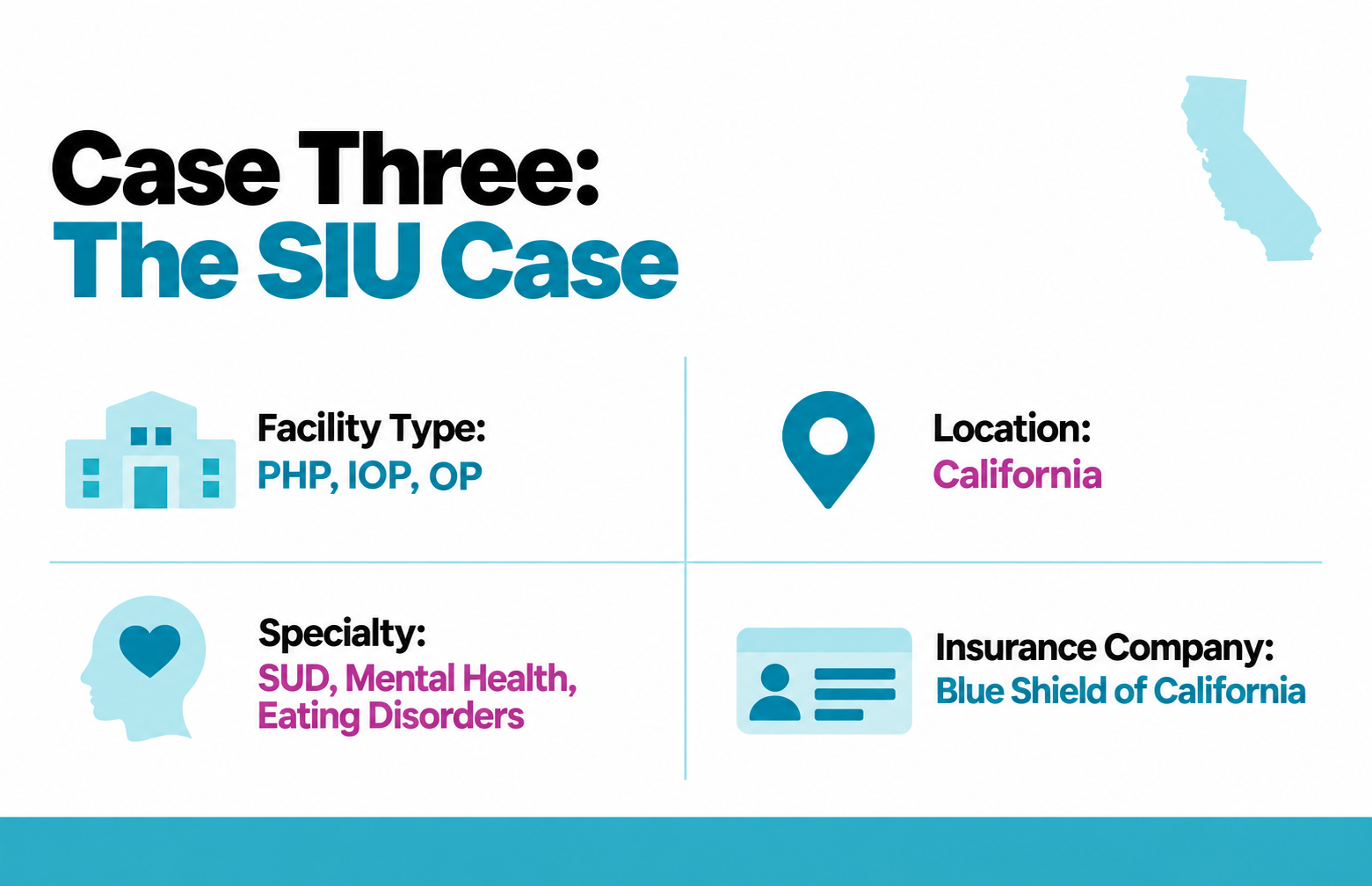
  • Facility Type: PHP, IOP, OP 
  • Location: California 
  • Specialty: SUD, Mental Health, Eating Disorders 
  • Insurance Company: Blue Shield of California 
  • What Triggered It: Blue Shield identified potential billing irregularities, including  member eligibility misrepresentation, services potentially billed but not rendered or  inconsistent with standards of care, and potential misrepresentation of  diagnoses/treatment intensity, triggering a comprehensive pre-payment claim  review.
  • Process: Worked directly with Blue Shield SIU throughout the audit process,  including documentation/claim reviews and coordination of an onsite SIU review. PPR Audit Resolution: Successfully removed from PPR effective 8/6/26. Since  removal, the facility has received multiple large payments clearing a significant  claims backlog. 
  • Recent Developments: Blue Shield SIU subsequently conducted an unannounced  onsite visit, and the facility has since received notice of termination of its in network contract. 

No two PPR cases look alike, and no two resolutions do either. But every facility Hansei  works with walks away with the same thing: a clear, defensible record — and the  reimbursement they’ve earned. That’s the goal every time, whatever the path looks like to  get there. 

Interested in learning more about our services and how we can help you get out of  Prepayment Review? Contact us.