In medical billing, the concept of a “fee schedule” plays a pivotal role in shaping the financial landscape for providers, insurers, and patients alike. A fee schedule sets the reimbursement rates for healthcare services, guiding how much providers are paid, how insurers determine payment, and what costs patients may be responsible for.
Understanding what a fee schedule is, its purpose, and how it is constructed sheds light on its wide-reaching impact across the healthcare system. Striking a balance—compensating providers fairly, maintaining cost efficiency for insurers, and ensuring affordability for patients—is essential for a transparent and effective billing process.
What is a Fee Schedule?
A medical billing fee schedule is a comprehensive list specifying the maximum reimbursement a healthcare provider can receive from an insurance company for particular services or procedures. Each service is assigned a unique code, typically standardized by the Current Procedural Terminology (CPT) or the Healthcare Common Procedure Coding System (HCPCS), which ensures consistency and accuracy throughout the billing and reimbursement process.

Why Do We Need Fee Schedules?
Fee schedules are established to create a transparent and consistent reimbursement system for healthcare providers. Their importance can be seen in several key areas:
- Cost Control: Insurers rely on fee schedules to manage and contain healthcare costs. Fixed rates for services allow for predictable and controllable expenditures.
- Transparency: Patients gain from fee schedules through clear, upfront pricing. This transparency empowers individuals to make informed choices about their healthcare.
- Fairness: Fee schedules help ensure providers receive fair compensation that reflects the complexity and resource demands of each service.
Ultimately, fee schedules foster a more predictable, transparent, and equitable healthcare system for all stakeholders.
How Are Fee Schedules Made?
Developing a fee schedule is a crucial process that ensures fair compensation for healthcare providers, accurately reflects service costs and complexities, and maintains consistency in billing and reimbursement. The key steps include:
- Data Collection: The process begins by gathering comprehensive data on healthcare services, including delivery costs, regional cost variations, and historical billing trends.
- Code Assignment: Each service receives a specific CPT or HCPCS code, which standardizes the description of procedures for accurate billing and reimbursement.
- Relative Value Units (RVUs): The Centers for Medicare & Medicaid Services (CMS) use RVUs to determine the relative value of services, factoring in physician work, practice expenses, and malpractice insurance.
- Conversion Factor: A monetary multiplier used to translate RVUs into payment amounts. The conversion factor is reviewed annually and may change based on economic and policy considerations.
- Adjustments and Updates: Fee schedules are regularly revised to reflect advancements in medical practice, technology, and shifts in the economic landscape. Updates address discrepancies and help maintain fairness and accuracy.
Following these steps enables healthcare organizations to make well-informed decisions and optimize their billing processes.
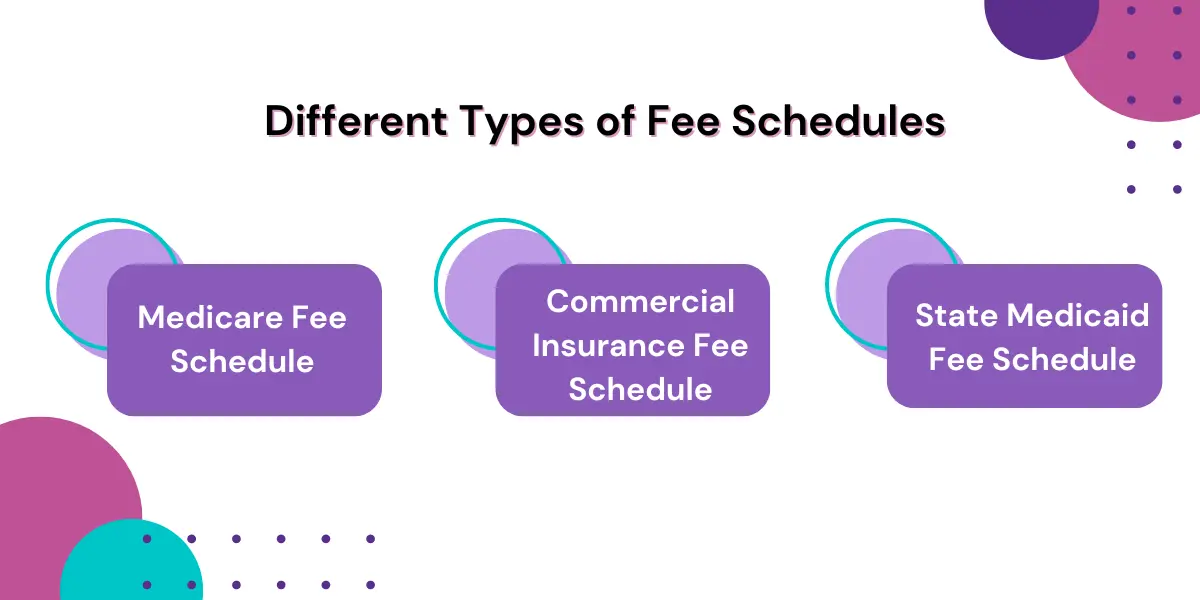
Different Types of Fee Schedules
Fee schedules play a vital role in healthcare, determining the rates at which services are reimbursed by insurance companies and government programs. Different types of fee schedules exist, each tailored to specific needs and contexts within the healthcare system. There are several types of fee schedules used in medical billing, including:
- Medicare Fee Schedule: This is the most commonly referenced fee schedule, used by the CMS to reimburse providers for services rendered to Medicare beneficiaries. It serves as a benchmark for many other insurance companies.
- Commercial Insurance Fee Schedules: Private insurers create their own fee schedules, often influenced by the Medicare Fee Schedule but adjusted based on negotiated contracts with providers.
- State Medicaid Fee Schedules: Each state has its own Medicaid program with a unique fee schedule. These schedules can vary significantly from state to state.
Understanding these variations is key to navigating billing practices and ensuring appropriate compensation for healthcare services.
How Fee Schedules Impact Different People in Your Organization
Fee schedules have a significant impact across your organization, influencing everything from how administrative staff bill for services to how healthcare providers are compensated. Well-designed fee schedules are crucial for ensuring that each department operates smoothly, with clear guidelines for reimbursement. This not only supports the financial stability of the organization but also enhances the quality of care delivered to patients.
Various people within the healthcare system are affected by fee schedules in different ways. Healthcare providers depend on these schedules to determine their compensation, making them essential for financial planning and sustaining their practice. Insurance companies use fee schedules to manage costs, negotiate contracts, and set premiums, ensuring they pay fair rates for services. Patients, though indirectly impacted, experience the effects of fee schedules through their out-of-pocket expenses and the overall affordability of care. Policymakers utilize fee schedules to control healthcare spending and allocate resources effectively, enabling them to adapt to economic changes and support specific health initiatives.
Simplifying the Behavioral Health Billing Process
A fee schedule in medical billing is key to keeping healthcare costs in check, making sure providers are fairly reimbursed, and maintaining clear, transparent pricing. While it brings many benefits to providers, insurers, and patients, it also requires ongoing tweaks to stay effective. By getting a solid grasp on how fee schedules work, your organization can better navigate the often-complicated world of medical billing. If you’re looking to optimize your fee schedules and improve your billing processes, Hansei Solutions is here to help—reach out to us today!